
 Admin
Admin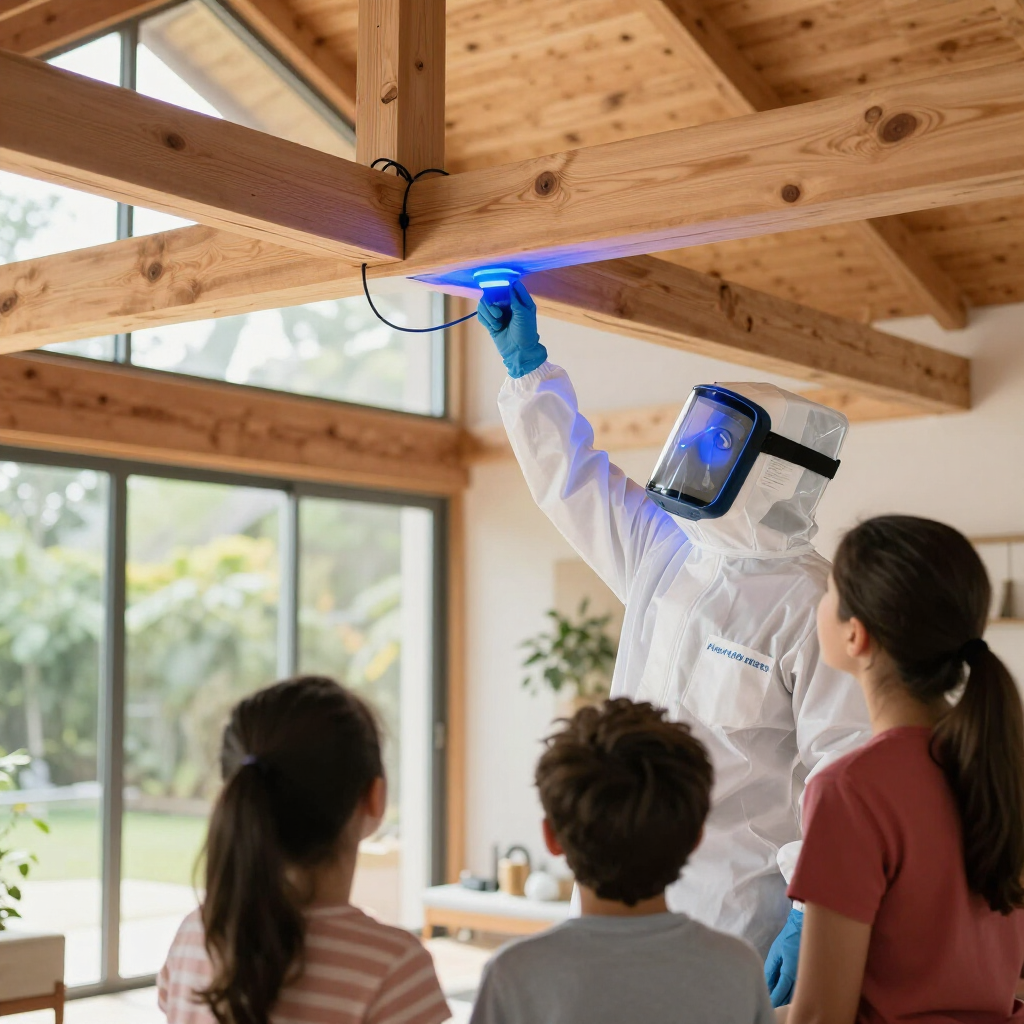
Discovering a woodworm infestation in your home can be stressful, especially if you have young children or pets. While woodworm sprays are widely used to treat wood-boring beetle infestations, many homeowners naturally wonder whether these products are safe to use around their families.
Modern woodworm sprays are designed to be effective against wood-boring insects and are regulated for use when applied according to the manufacturer’s instructions. However, like many pest control products, they contain active ingredients that require careful handling during application. For this reason, it is important to understand how these products work, what safety precautions should be followed, and when alternative treatment methods may be worth considering.
In this guide, we’ll explain how woodworm sprays work, discuss safety considerations for households with pets and children, and compare them with chemical-free options such as microwave woodworm treatment.
What Are Woodworm Sprays?
Woodworm sprays are insecticide-based products formulated to control wood-boring beetles and, in some cases, help protect timber against future infestations.
They are commonly used on:
- Roof timbers
- Floor joists
- Wooden furniture
- Staircases
- Doors
- Structural beams
Depending on the product, woodworm sprays may be suitable for DIY use or require professional application.
How Do Woodworm Sprays Work?
Woodworm sprays are typically applied directly to the surface of exposed timber.
The active ingredients are designed to penetrate the wood to varying degrees, depending on:
- The product formulation
- The wood species
- Moisture content
- Surface coatings
- Application method
Their purpose is to eliminate active insects and, for some products, provide residual protection against future infestations.
Are Woodworm Sprays Safe?
When used exactly as directed by the manufacturer, approved woodworm sprays are intended to be used safely.
However, because they contain insecticidal ingredients, it is important to follow all safety instructions carefully.
This may include guidance on:
- Personal protective equipment (PPE)
- Ventilation
- Drying or curing times
- Re-entry to treated areas
- Safe storage
Always read and follow the product label or seek advice from a qualified pest control professional.
Safety Considerations for Children
Young children are naturally curious and may touch treated surfaces before products have fully dried or cured.
For this reason, manufacturers often recommend:
- Keeping children away from the treatment area during application.
- Following the recommended drying or re-entry period.
- Avoiding direct contact with freshly treated timber.
- Storing products securely out of children’s reach.
Following these instructions helps reduce unnecessary exposure.
Safety Considerations for Pets
Dogs, cats, birds, and other pets may also come into contact with treated timber.
Professional guidance generally includes:
- Keeping pets away during treatment.
- Preventing pets from chewing or licking treated wood.
- Allowing the product to dry fully before permitting access.
- Following any additional recommendations provided by the manufacturer or pest control company.
If you have unusual pets or sensitive species, discuss this with your pest control provider before treatment begins.Visit online https://www.shashel.eu for more details .
Why Professional Application Can Be Beneficial
For larger infestations or structural timber, professional treatment offers several advantages.
Qualified technicians:
- Select appropriate products.
- Apply treatments correctly.
- Follow safety procedures.
- Provide guidance on re-entry times.
- Assess whether chemical treatment is the best option.
Professional advice can be particularly valuable in homes with children, pets, or valuable timber.
Chemical-Free Alternatives
Many homeowners now choose chemical-free woodworm treatment to reduce the use of pesticides inside their homes.
One increasingly popular option is microwave woodworm treatment.
Instead of using insecticides, microwave technology generates controlled heat inside the timber through dielectric heating.
This process raises the wood to temperatures that are intended to eliminate:
- Woodworm larvae
- Beetle eggs
- Pupae
- Adult beetles
Because no pesticides are applied, microwave treatment leaves no chemical residue on the timber.
Microwave Treatment vs. Woodworm Sprays
| Feature | Microwave Treatment | Woodworm Spray |
|---|---|---|
| Uses Chemicals | No | Yes |
| Leaves Chemical Residue | No | Usually yes |
| Uses Heat | Yes | No |
| Chemical Odor | None | May occur depending on the product |
| Suitable for Localized Treatment | Excellent | Good |
| Residual Protection | No | Often available |
Both methods can be effective, and the most appropriate choice depends on the property, infestation, and professional assessment.
Choosing the Right Treatment
The best treatment depends on several factors, including:
- The extent of the infestation.
- The location of the timber.
- Accessibility.
- Structural condition.
- Presence of children or pets.
- Personal preference regarding pesticide use.
A timber preservation specialist can help determine the most suitable solution.
Tips for Keeping Your Home Safe During Treatment
Whether you choose chemical or heat-based treatment, good preparation is important.
Recommended steps include:
- Follow all manufacturer instructions.
- Keep children and pets away from the treatment area.
- Ensure good ventilation if required.
- Allow recommended drying times before re-entry.
- Store treatment products safely.
- Ask your contractor any questions before work begins.
Preventing Future Woodworm Problems
Prevention reduces the likelihood of future infestations regardless of the treatment method.
Protect your timber by:
- Repairing roof leaks promptly.
- Improving ventilation.
- Reducing indoor humidity.
- Keeping structural timber dry.
- Inspecting roof spaces annually.
- Monitoring furniture for fresh frass and exit holes.
- Addressing damp conditions quickly.
Healthy timber is naturally less attractive to wood-boring beetles.
Common Myths About Woodworm Sprays
Myth 1: All Woodworm Sprays Are Dangerous
Fact: Approved woodworm sprays are regulated products designed for use according to their instructions. Following the label directions and professional guidance is essential for safe use.
Myth 2: Chemical-Free Treatments Are Always Better
Fact: Both chemical and non-chemical treatments have advantages. The best choice depends on the infestation, the timber, and the property’s specific needs.
Myth 3: One Treatment Prevents Woodworm Forever
Fact: No treatment can guarantee that woodworm will never return. Ongoing maintenance and moisture control remain important.
When Should You Contact a Professional?
Professional advice is recommended if:
- Structural timber is affected.
- Fresh frass continues appearing.
- New exit holes develop.
- Valuable furniture requires treatment.
- You have children or pets and want advice on the safest option.
- You’re comparing chemical and microwave treatments.
A qualified timber preservation specialist can inspect your property, explain the available treatment methods, and recommend the most appropriate solution based on your home’s needs.
Conclusion
Woodworm sprays remain an effective treatment option for many infestations when they are used correctly and according to the manufacturer’s instructions. However, because they contain insecticidal ingredients, homeowners with children or pets should carefully follow all safety guidance regarding application, ventilation, and re-entry to treated areas.
For those who prefer to avoid pesticides, microwave woodworm treatment offers a chemical-free alternative that uses controlled heat to eliminate wood-boring insects without leaving chemical residues. The right solution depends on the extent of the infestation, the condition of the timber, and your household’s needs. A professional inspection is the best way to determine which treatment provides the right balance of effectiveness, safety, and long-term timber protection.